
Technical documentation doesn’t need to be excessively complicated. We make complex information comprehensible.
We are experts in all areas of law. When understanding every subtle nuance really matters, you can rely on our experience.
Some things are difficult enough to understand in your own language. We make sure that you get your message across. In any language.
YABYLON is your one-stop shop for translation services in every subject area. Using the latest technology, YABYLON covers the entire spectrum of services, from translation to the ready-to-print, foreign-language document. YABYLON’s staff are highly motivated experts in their field, and can provide you with personalized advice on a fast, flexible basis. Our standardized quality processes ensure that our work is of a consistently high quality. Using long-standing business relationships and custom-tailored solutions, we can boost your image in foreign markets the world over.
Technical translation of operating instructions, workshop documentation, product and marketing information, catalogues, websites and training materials.
Translation of specialist texts, manuals, product specifications, performance specifications and patent applications.
Top-quality, reliable translations of documentation, procedural instructions and manuals for maximum safety.

Legally compliant translation of scientific papers, patents, agreements, studies and specialist publications.
Professional translations of contractual terms, terms and conditions, certificates, contracts, verdicts, correspondence, statements of claims, official records and official documents.
High-precision, highly detailed, professional translation for patent law documents, PCT applications, patent lawsuits, reports and correspondence.
Professional translations of documents, reports and specialist texts for credit institutes, banks, accounts, stock trading, auditors and state organisations.
Software localisation with UI texts to suit your target market, help pages, and product descriptions and manuals.
Marketing-oriented translations of advertising and specialist texts; idiomatic expressions and turns of phrase for presenting products in foreign-language markets.
 Translation
Technically accurate, reliable translation of texts into all world languages – from operating instructions and data sheets to annual accounts, stock market reports, as well as medical studies, contracts, official records and legal documents. All of YABYLON’s translations are carried out by professional translators from our extensive network, who specialise in the relevant fields and translate exclusively into their native languages. By combining this service with a standardised quality assurance system, we are able to guarantee consistently high-quality translations aimed directly at your target market.
 Interpreting
Our experienced interpreters can accompany you during negotiations or at conferences, business meetings, in legal matters, training sessions or trade fairs. Depending on your requirements, you can choose either a simultaneous interpreter, who will sit in an interpreting booth and provide you with immediate translations in your language, or a consecutive interpreter, who will use breaks in speech to relay the notes they have made to you in your own language. Whichever you choose, you can always rely on our highly reliable, excellent translation quality and speed.
 Client Portal
The YABYLON Customer Portal simplifies the order process by providing you with direct access to our translation services. In simple steps the customer portal only requests the most essential information – including your preferred delivery date. If you’re in a hurry, you can order language services immediately or request a quote first. Whatever you choose: a fast response time is guaranteed due to the integration with our translation management system.
 REST API
In addition to being able to order our translation and language services through our YABYLON Customer Portal, you can also use our REST API to directly connect your own software systems, making the translation process even simpler. Through our REST API you can place orders directly from within your systems, ensuring a more streamlined process. All requests and orders are also visible in our Customer Portal, giving you a perfect overview.
 Accreditation
YABYLON offers legally certified translation for all types of legal documents – including certificates, identification papers, official records, legal statements and verdicts – for official authorities or courts of law. YABYLON’s sworn translators can accredit finished translations. To do so, they compare the translation to the original to ensure that it is correct and complete, thus increasing the authenticity of the document.
 Desktop Publishing
In addition to the translation work itself, we also offer a comprehensive range of desktop publishing services. Once your translation is complete, we will arrange the layout of your documents so that they can be used without any problem in publications such as brochures, magazines, books or catalogues. The layout is always suited to your requirements, even for languages with complex characters, such as Chinese, Japanese and Arabic. Our desktop publishing service includes support for all conventional systems and formats, such as Microsoft Word, Excel, Powerpoint, InDesign, Illustrator, FrameMaker and Quark XPress.
 Terminology Management
With our services in terminology management, we help companies to maintain and communicate their corporate identities beyond the borders of their native market and country. This is particularly important for those trying to break into new international markets. We help our customers decide the best way of communicating their image and presenting their products and services to their target audience in a foreign language. We revise the existing terminology database, build up a vocabulary of specialist words for the market in question and develop specialist translation databases for specific target markets.
 Project Management
We have been helping our customers with the translation of multi-lingual projects for many years now. During this time, we have always been particularly successful in the fields of project management and consulting. Our project managers are responsible, multi-lingual experts, and will work with you very closely to develop the best, most cost-effective strategy for you to achieve your goals in the field of international communication. Our process includes recognising and minimising potential risks, proposing creative solutions to complex challenges and compiling tailor-made service packages. Each customer is assigned a permanent project manager to work through, coordinate and document their processes.
 The latest technology
We always work with the latest technology – especially when it comes to Computer-Aided Translation (CAT). This allows us to deliver highly accurate, linguistically consistent translations while also saving time and costs, utilizing a number of key advantages. The use of translation memories means we never need to translate frequently occurring fragments of text more than once. This makes translation projects faster and more cost-effective. CAT also allows us to apply consistent terminology management and writing styles – in any language and for all translation projects.
Our team is made up of qualified, motivated staff from a wide range of fields who are devoted to the translation of languages, and boast in-depth training and years of experience in this area. We utilise our energy and work ethic to produce a continually outstanding quality of service that inspires a long-term sense of trust in our customers.
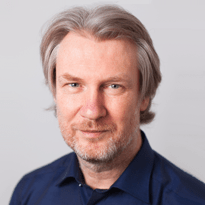
As our CEO, Heiko Ehrhard stands for expertise and security in negotiations with international customers. He gained experience abroad in the 1990s, working as an international operations manager in North America, Australia and Europe. Mr Ehrhard entered the world of Asian business in 2003, building up an extensive network of business contacts over the course of numerous postings in China and the neighbouring East Asian countries. Before founding Yabylon GmbH in 2010, he worked for a leading language service provider, where he was responsible for localisation and consulting projects for key multinational clients. In addition to his native German, Mr Ehrhard speaks fluent English, Spanish and Chinese.
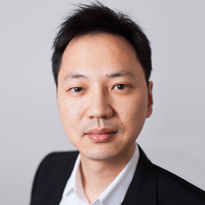
Li Yu is a founding member of Yabylon GmbH. In addition to working as a freelance economy and technology journalist, in 1997 he also began translating and interpreting for clients from a variety of economic sectors. His work in this area helped many customers from the Chinese industrial sector gain a permanent foothold in the European market. Thanks to his many years of experience in the field of international, multilingual project management, he has become primarily responsible for our operating business at Yabylon. Mr Yu has degrees in Germanic Studies and Communication and Media Studies, and speaks fluent German, English and French in addition to his native Chinese.
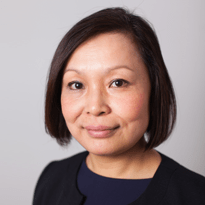
Motoko Yoshida has been working in the translation industry for many years. She is a well-established technical and patent translator, and her extensive experience and skills have played a key role in Yabylon’s success ever since the company’s foundation. Ms Yoshida is in charge of our Japanese translation team, and is responsible for quality management. In addition to her native Japanese, she speaks fluent German, English and Italian.
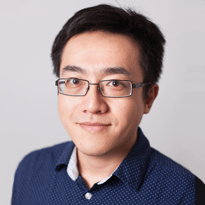
Ling Yan completed his Technical Translation and Germanic Studies degree in Shanghai before becoming a technical translator, interpreter and engineer’s assistant. He came to Berlin in 2002 and has since proven his worth on the European market, eventually joining our team in 2013. His precise understanding of complex technical content in German and English enables him to produce extremely accurate translations into Chinese from both languages, thus meeting the highest quality standards. In addition to his native Chinese, Ling Yan speaks fluent German and English.

Götz Baumeister discovered his faculties and his love for translation during his literal studies. He had made first contact while he was translating specialised texts during his work as a graduation assistant. Regular and extensive travels abroad gave him linguistic routine. Götz Baumeister has gained professional experience since 2008, working for local and global language service providers. Since that time he has worked with virtually all common file formats, with XML-based content management systems, and the usual CAT tools. He has also kept his avid eye as a proofreader as well as his sense for good linguistic style. Götz Baumeister speaks fluent English and French, as well as Spanish and Indonesian on occasion.
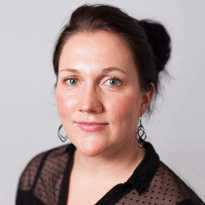
Katja Seidel completed her degree in Translation Studies in 2008, specialising in English and Russian. Since then, she has worked for a number of companies in the translation sector – from start-ups and medium-sized operations to corporation-sized businesses. This experience in the field of project management enables her to find specific, customer-oriented solutions for complex translation projects. In addition to her native German, Ms Seidel speaks fluent English and Russian.
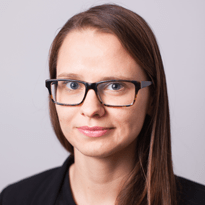
Sarma Šķēle graduated in 2013 as a technical translator specialising in English, German and Latvian, after which she began working for a large Latvian translation agency. Here, she gained experience in a number of departments, becoming intimately acquainted with professional translation software and leading a team of project managers. As such, she is not only an injection of new blood for our team, but also a valuable source of technical support for our translation tools. In addition to her native Latvian, Ms Šķēle speaks fluent German, English and Russian.
YABYLON GmbH
Obentrautstrasse 35
10963 Berlin, Germany
+49 30 208 98 59 00
info@yabylon.com